
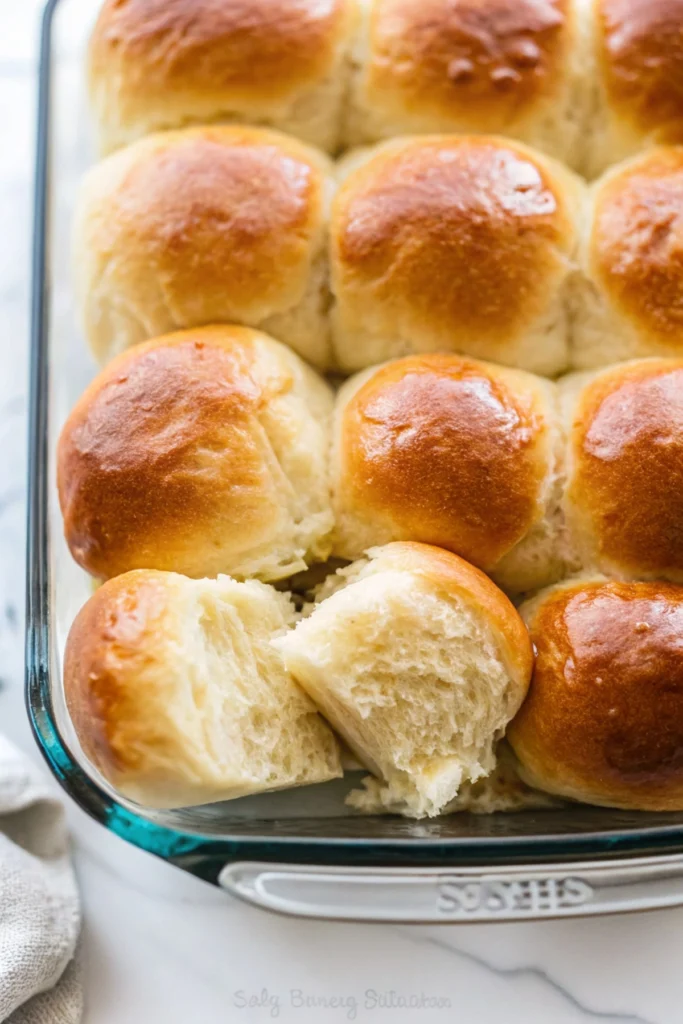
Soft dinner rolls are a timeless classic, and this homemade version delivers everything you want: a pillowy-soft texture, rich buttery flavor, and a light, flaky crumb.
Made with just 7 simple ingredients, this beginner-friendly yeast recipe is easy to follow and nearly foolproof. Whether you’re baking for a holiday table, weeknight dinner, or make-ahead meal, these rolls are guaranteed to steal the spotlight from the main dish.
• Pillow-Soft Texture: These rolls are exceptionally soft and fluffy, with a delightful flaky and buttery texture that melts in your mouth.
• Simple Ingredients: Made with only 7 basic ingredients, making them accessible and easy to prepare.
• Beginner-Friendly: This recipe is designed to help even novice bakers feel confident working with yeast dough.
• Make-Ahead Options: Includes instructions for prepping the rolls ahead of time and freezing, perfect for busy schedules or holiday meals.
• Versatile: Perfect as a side dish, for sliders, breakfast sandwiches, or soaking up sauces.
• Electric Stand Mixer (with dough hook or paddle attachment) or large mixing bowl (for dough preparation)
• 9x13-inch Baking Pan (or two 9-inch square/round pans, or cast iron skillet) (for baking rolls)
• Silicone Spatula (for scraping bowls)
• Measuring cups and spoons
• Instant-Read Thermometer (optional, for checking milk temperature)
• Bench Scraper (optional, for dividing dough)
• Whole Milk – Warmed to activate yeast, contributes to the softest texture and phenomenal flavor.
• Platinum Yeast from Red Star (Instant Yeast) – The leavening agent for fluffy rolls.
• Granulated Sugar – Feeds the yeast, increases activity, and tenderizes the dough.
• Large Egg – Provides structure and flavor.
• Unsalted Butter – Softened to room temperature, promises a flavorful and soft dinner roll.
• Salt – Essential for flavorful bread.
• All-Purpose Flour or Bread Flour – All-purpose is convenient; bread flour produces chewier rolls.
• Melted Unsalted Butter mixed with Honey – For extra flavor and shine.
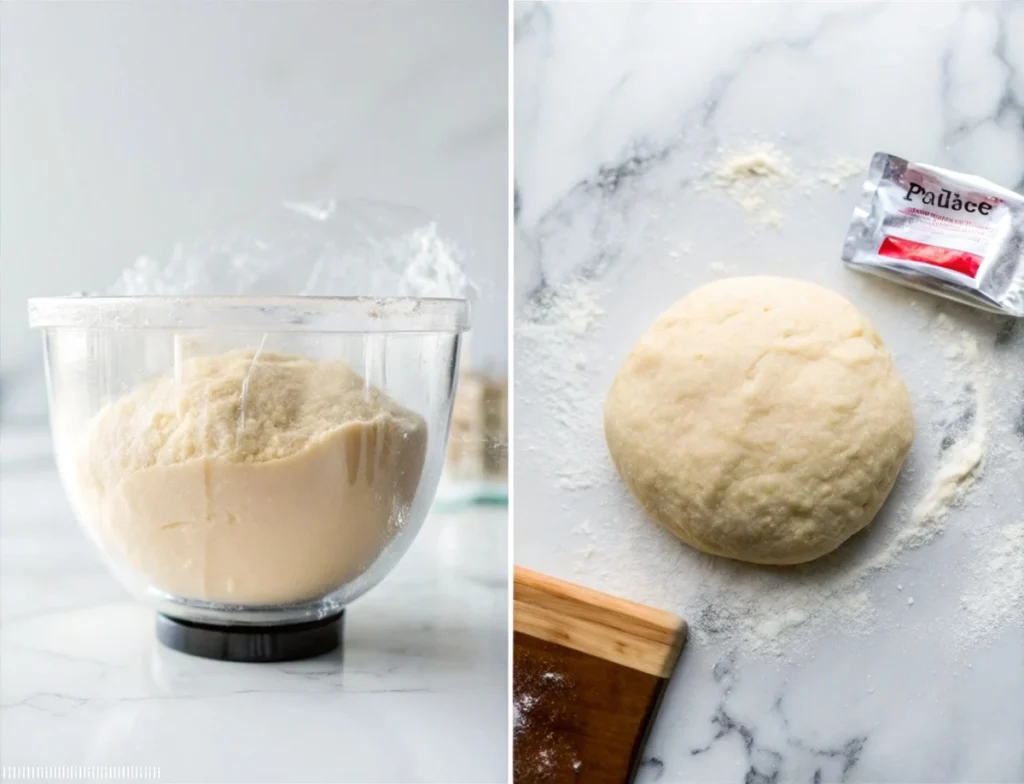
• Check Yeast Activity: Foamy yeast means successful activation and proper rising.
• Proper Kneading: Builds gluten for a chewy yet tender roll texture.
• Accurate Flour Measurement: Spoon and level flour to prevent dense rolls.
• Warm Rise Environment: Dough rises best in warmth—use an oven proof setting if needed.
• Don’t Overbake: Bake just until golden for perfectly soft rolls.
Problem: Rolls are dense and heavy.
• Likely Cause: Too much flour, under-kneading, or inactive yeast.
• Solution: Measure flour accurately, knead fully, and check yeast freshness.
Problem: Rolls didn’t rise well.
• Likely Cause: Milk too hot/cold or yeast inactive.
• Solution: Keep milk at 100–110°F (38–43°C) and allow full rise time.
Problem: Dough too dry.
• Likely Cause: Excess flour.
• Solution: Dough should stay soft and slightly sticky.
Problem: Dough too sticky.
• Likely Cause: Not enough kneading.
• Solution: Knead longer or add flour 1 Tbsp at a time.
• Overnight Prep: Shape rolls and refrigerate up to 16 hours before baking.
• Freezing Options: Freeze shaped or baked rolls for up to 3 months.
• Flavor Variations: Add rosemary, cheddar, garlic, or herbs to the dough.
• Serving Ideas: Perfect with honey butter, soups, sliders, or breakfast sandwiches.
• Butter or Honey Butter
• Soups & Stews
• Roast Meats
• Fresh Salads
• Coffee or Tea
• Room Temperature: Store covered for 2–3 days.
• Refrigerator: Airtight container for up to 1 week.
• Freezer: Freeze baked or unbaked rolls for up to 3 months.

Flaky, soft, and buttery homemade dinner rolls made with 7 simple ingredients. Perfect for beginners and can be prepped ahead.
Activate the Yeast
Pour the warm milk into the bowl of a stand mixer. Add the yeast and 1 tablespoon of the sugar. Gently stir, then cover and let sit for about 5 minutes, until the mixture becomes foamy on the surface. This confirms the yeast is active.
Combine Initial Ingredients
Add the remaining sugar, egg, softened butter, and salt to the yeast mixture. Add 1 cup of flour and mix on low speed until combined. Stop to scrape down the sides of the bowl as needed.
Form the Dough
Gradually add the remaining flour while mixing on medium speed. Continue mixing until the dough pulls away from the sides of the bowl and forms a soft, slightly sticky mass.
Knead the Dough
Knead the dough with the dough hook for about 5 minutes, or knead by hand on a lightly floured surface for the same amount of time. The dough should be smooth, elastic, and bounce back when lightly pressed.
First Rise
Lightly grease a large bowl. Place the dough inside, turning it once so all sides are coated. Cover the bowl and allow the dough to rise in a warm place for 1 to 2 hours, or until doubled in size.
Shape the Rolls
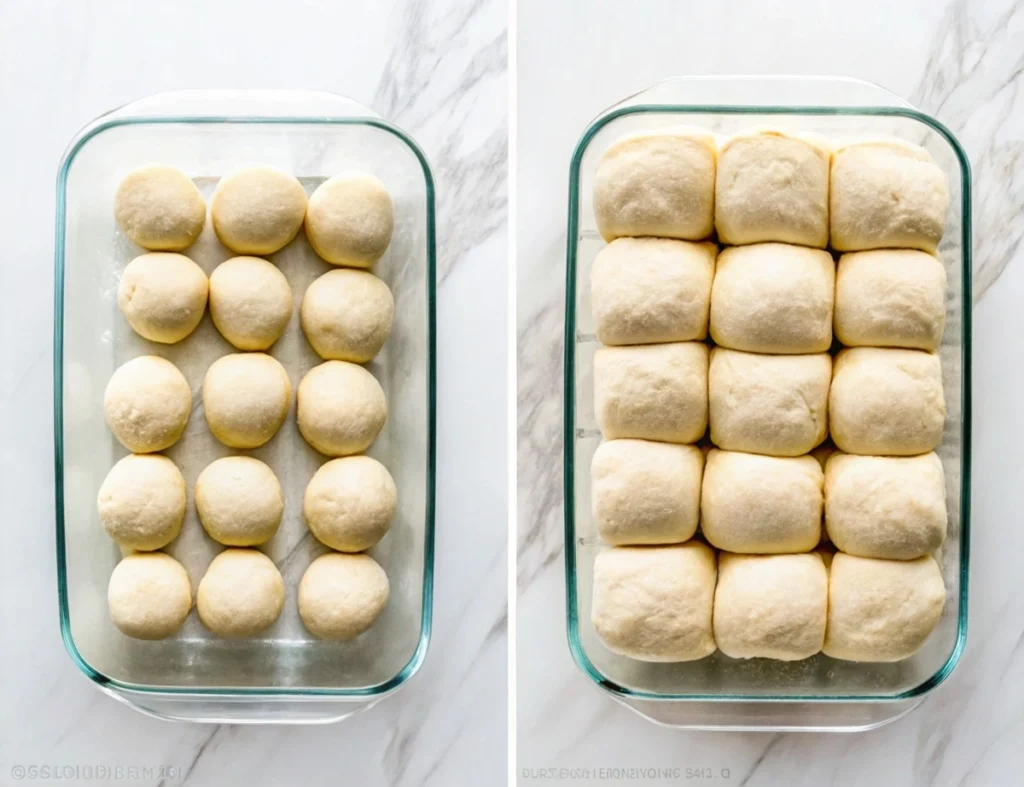
Grease a 9×13-inch baking pan. Punch down the risen dough to release air, then divide it into 14–16 equal portions. Shape each portion into a smooth ball and arrange them evenly in the prepared pan.
Second Rise
Cover the pan and let the rolls rise again for about 1 hour, or until they appear puffy and are touching each other.
Bake
Preheat the oven to 350°F (177°C). Bake the rolls for 20–25 minutes, until the tops are lightly golden. If they begin browning too quickly, loosely tent the pan with foil. The internal temperature should reach 190–200°F (88–93°C).
Finish and Serve
Remove the rolls from the oven. If desired, brush with melted butter mixed with honey. Let cool slightly, then serve warm.
Freezing Baked Rolls:
You have two easy overnight options:
Option 1 – Shape & Chill
Option 2 – First Rise in the Fridge
These tools make shaping and baking much easier: