
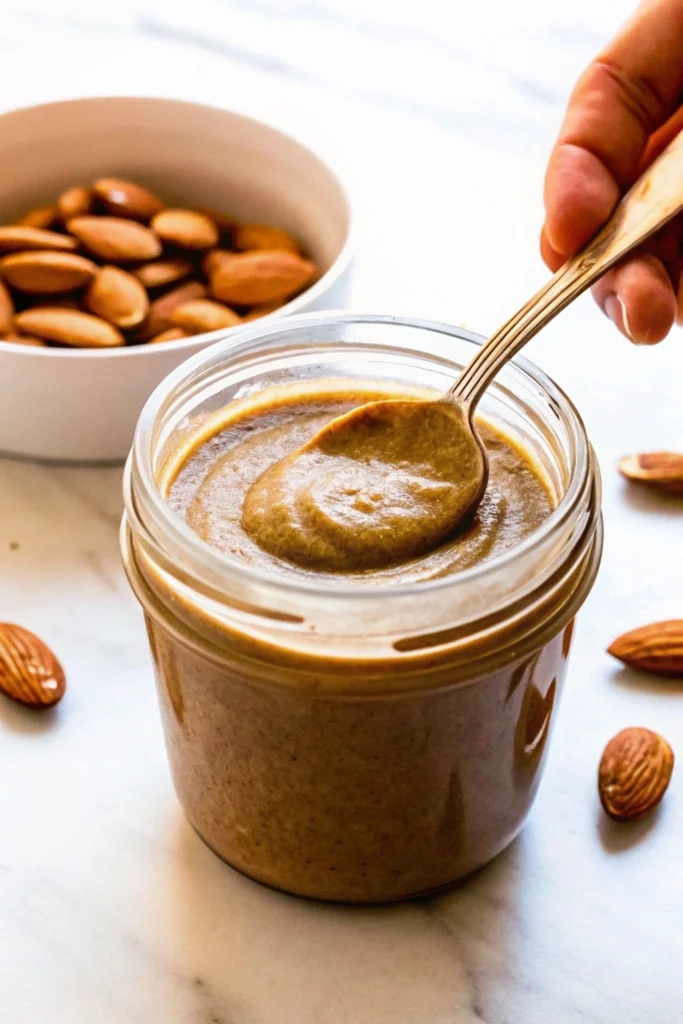
Homemade almond butter is a simple, wholesome alternative to store-bought versions, offering fresher flavor, better texture, and full control over ingredients.
Made with just raw almonds and a pinch of salt, this easy recipe transforms toasted almonds into a rich, creamy nut butter using a food processor. Affordable, customizable, and naturally healthy, homemade almond butter is perfect for spreading, blending, or enjoying straight from the jar.
• Superior Flavor: Tastes fresher and more intense than most store-bought almond butter.
• Cost-Effective: More affordable to make at home, especially when buying almonds in bulk.
• Customizable: Easily adjust the flavor with salt, cinnamon, vanilla, or sweeteners.
• Healthy Fat Source: A great source of healthy fats and protein.
• High-speed blender or Food Processor (MANDATORY) 🎛️
• Large, rimmed baking sheet
• Spatula (for scraping down sides)
• Mason jar (for storage)
• Raw Almonds – The base of the recipe. Toasting them is highly recommended for deeper flavor.
• Salt – Essential for enhancing the flavor.
• Ground Cinnamon – For a hint of warm spice.
• Vanilla Extract – Adds a special, bakery-like flavor.
• Maple Syrup or Honey – For a touch of sweetness.
1. Toast the Almonds: Preheat the oven to 350°F (177°C). Spread the raw almonds across a large, rimmed baking sheet. Toast for 10 minutes, stirring halfway.
2. Cool: Let the almonds cool until they are just warm (not hot), about 10 minutes.
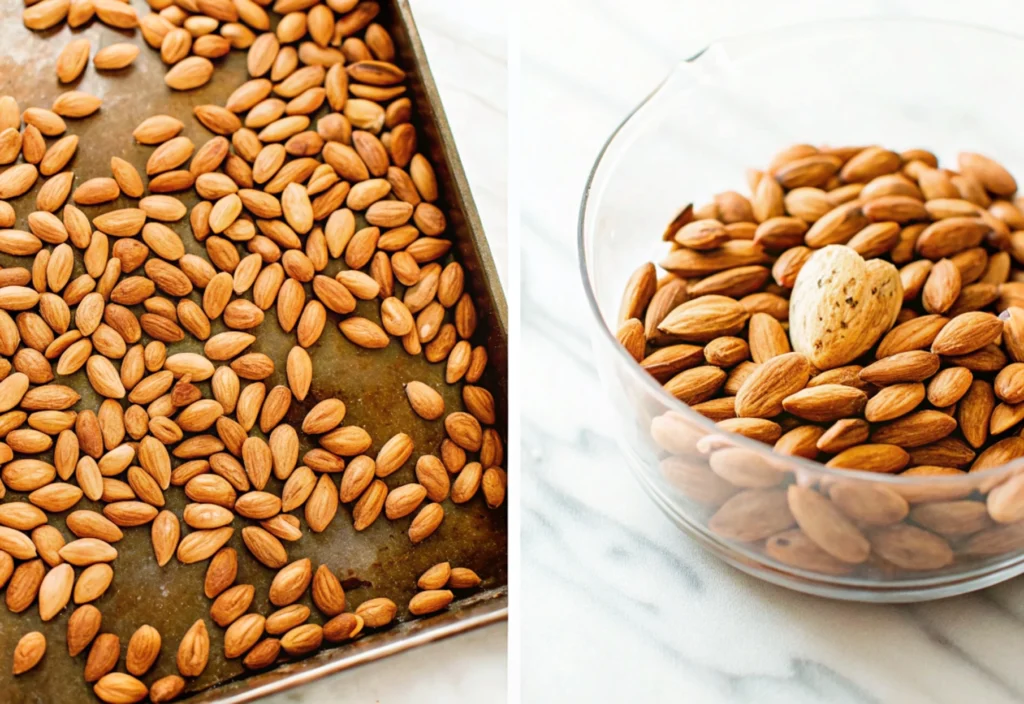
3. Blend (The Transformation): Transfer the warm almonds to a high-speed blender or food processor. Blend until creamy.
• Stage 1 (Flour): The almonds will first turn into a coarse, flour-like consistency.
• Stage 2 (Ball): They will then clump together into a large ball against the side of the processor. Keep scraping down the sides and breaking up the ball.
• Stage 3 (Butter): Finally, the almonds will release their natural oils and turn into a lusciously smooth and creamy butter. This process can take 10–15 minutes depending on your machine. Be patient!
4. Add Flavorings: Once the almond butter is very smooth, blend in the salt and any optional add-ins (cinnamon, vanilla, sweetener).
5. Final Blend: Blend until the flavorings are evenly dispersed. If adding liquid sweetener like maple syrup, the mixture may seize slightly; continue blending until it becomes creamy again.
6. Cool and Store: Let the almond butter cool completely to room temperature before transferring it to a mason jar. Store in the refrigerator.
• Warm Almonds are Key: Toasting and blending the almonds while they are still warm helps them release their oils faster.
• Be Patient: The transformation from a ball to a creamy butter can take time. Do not add any oil; the almonds will release their own.
• Use a High-Powered Machine: A food processor is generally better than a blender, but a high-speed blender can also work.
• Scrape Down Often: Pause frequently to scrape down the sides of the bowl for even blending.
Problem: The mixture is stuck in a ball and won't turn into butter.
• Likely Cause: Lack of patience or almonds have cooled too much.
• Solution: Keep blending! This stage is normal. If the machine overheats, stop, cool for a few minutes, then resume.
Problem: The almond butter is grainy or not perfectly smooth.
• Likely Cause: Not blended long enough.
• Solution: Continue blending until very smooth. This may take up to 15 minutes.
Problem: The machine is overheating.
• Likely Cause: Continuous blending for too long.
• Solution: Stop and let the machine rest for 5–10 minutes, then resume in short bursts.
• Roast for Flavor: Roasting is crucial for deeper, more complex flavor.
• Storage: Store in the refrigerator to prevent oils from going rancid; the butter will thicken when cold.
• Variations: Add cocoa powder for chocolate almond butter or a pinch of cayenne pepper for a spicy kick.
• Toast or English Muffins: A breakfast classic.
• Fruit: Apples, bananas, or berries.
• Oatmeal or Yogurt: Stir into your morning bowl.
• Smoothies: Adds creaminess and protein.
• Refrigerator: Store in an airtight jar for up to 2 weeks, or until signs of spoilage.
• Freezer: Can be frozen for longer storage.

A simple, healthy recipe for creamy, fresh-tasting almond butter made at home with a food processor or high-speed blender.
Toast the Almonds
Preheat the oven to 350°F (177°C). Spread the raw almonds evenly across a large, rimmed baking sheet. Toast for about 10 minutes, stirring halfway through, until lightly golden and fragrant.
Allow Almonds to Cool Slightly
Remove the baking sheet from the oven and let the almonds cool for approximately 10 minutes. They should be warm but not hot, which helps release their natural oils during blending.
Begin Blending
Transfer the warm almonds to a high-speed blender or food processor. Start blending, stopping frequently to scrape down the sides of the bowl. At first, the almonds will break down into a coarse, flour-like texture.
Continue Processing Through Stages
As blending continues, the almonds will clump together into a thick paste or large ball. Keep processing and scraping down the sides. After several more minutes, the almonds will release their oils and gradually turn into a smooth, creamy butter. This process can take 10–15 minutes depending on your machine.
Add Salt and Optional Flavorings
Once the almond butter is fully smooth, add the salt along with any optional flavorings such as cinnamon, vanilla extract, or sweetener. Blend again until everything is evenly incorporated. If the mixture tightens briefly after adding liquid sweeteners, continue blending until it smooths out again.
Cool and Store
Let the almond butter cool completely to room temperature. Transfer to a clean, airtight jar and store in the refrigerator.
Change it up: You can create a mixed nut butter by substituting raw cashews, walnuts or pecans for some of the almonds. Just roast them all on the pan together.