
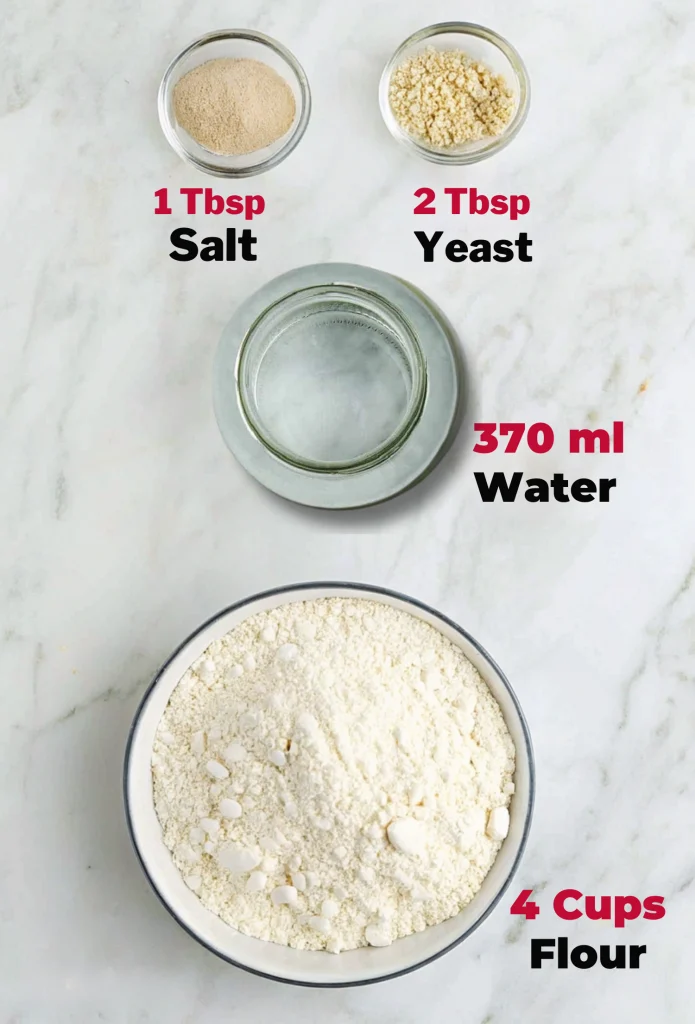
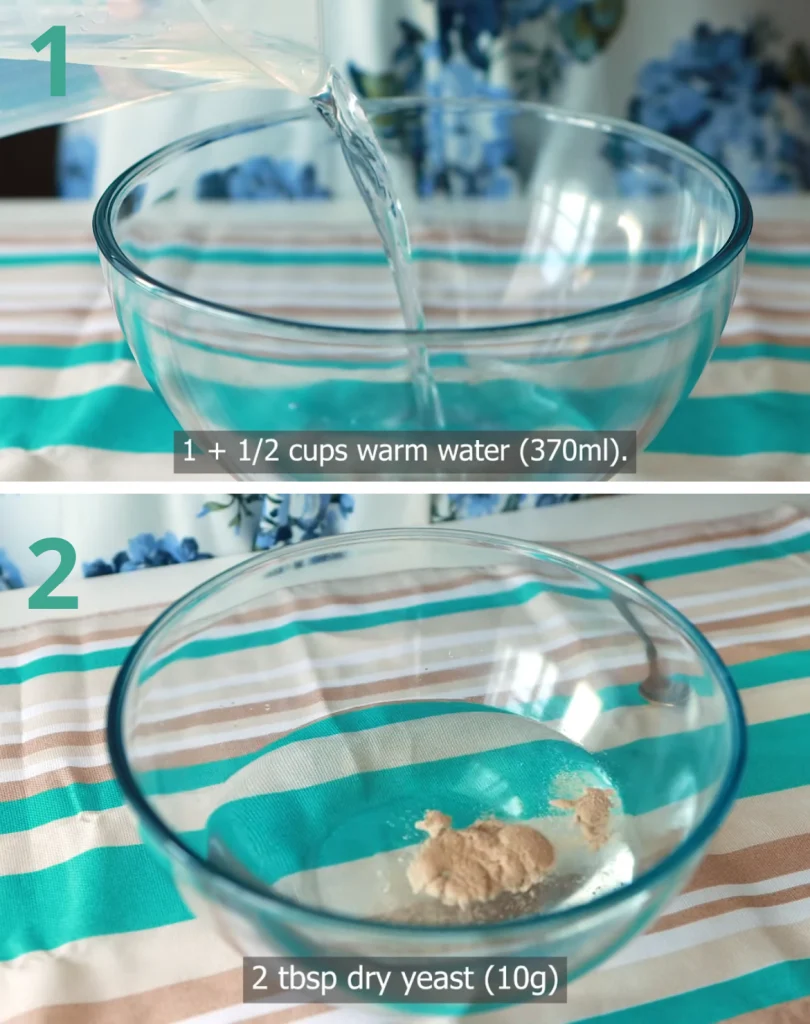
 In a large bowl, pour 1 + 1/2 cups of warm water (370 ml). The water should be warm to the touch (around 100-105°F or 38-40°C) – too hot, and it may kill the yeast; too cold, and it will slow down the activation. This temperature is ideal for allowing the yeast to become active.
Add 2 tablespoons of active dry yeast (10 g) to the warm water. Stir gently to dissolve the yeast in the water. Let this mixture rest for 5 to 10 minutes. During this time, the yeast will activate and form bubbles on the surface. This step is essential as it ensures the yeast is alive and ready to make the dough rise.
In a large bowl, pour 1 + 1/2 cups of warm water (370 ml). The water should be warm to the touch (around 100-105°F or 38-40°C) – too hot, and it may kill the yeast; too cold, and it will slow down the activation. This temperature is ideal for allowing the yeast to become active.
Add 2 tablespoons of active dry yeast (10 g) to the warm water. Stir gently to dissolve the yeast in the water. Let this mixture rest for 5 to 10 minutes. During this time, the yeast will activate and form bubbles on the surface. This step is essential as it ensures the yeast is alive and ready to make the dough rise.
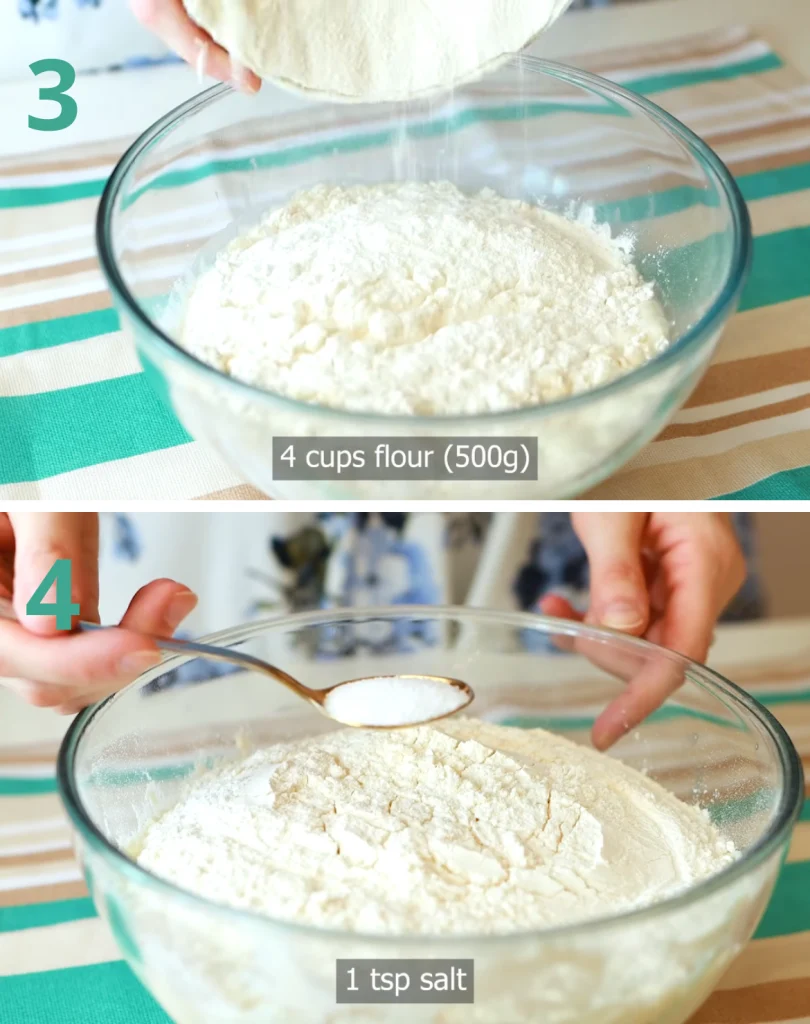 Pour 4 cups of flour (500 g) into the bowl with the activated yeast. For a smooth blend, add the flour gradually. This helps prevent lumps and makes it easier to combine with the other ingredients.
Add 1 teaspoon of salt. Salt plays an important role in bread, as it strengthens the dough’s structure and enhances the flavor. Mix everything well until you have a smooth, slightly sticky dough. Make sure all the flour is well incorporated for a uniform texture.
Pour 4 cups of flour (500 g) into the bowl with the activated yeast. For a smooth blend, add the flour gradually. This helps prevent lumps and makes it easier to combine with the other ingredients.
Add 1 teaspoon of salt. Salt plays an important role in bread, as it strengthens the dough’s structure and enhances the flavor. Mix everything well until you have a smooth, slightly sticky dough. Make sure all the flour is well incorporated for a uniform texture.
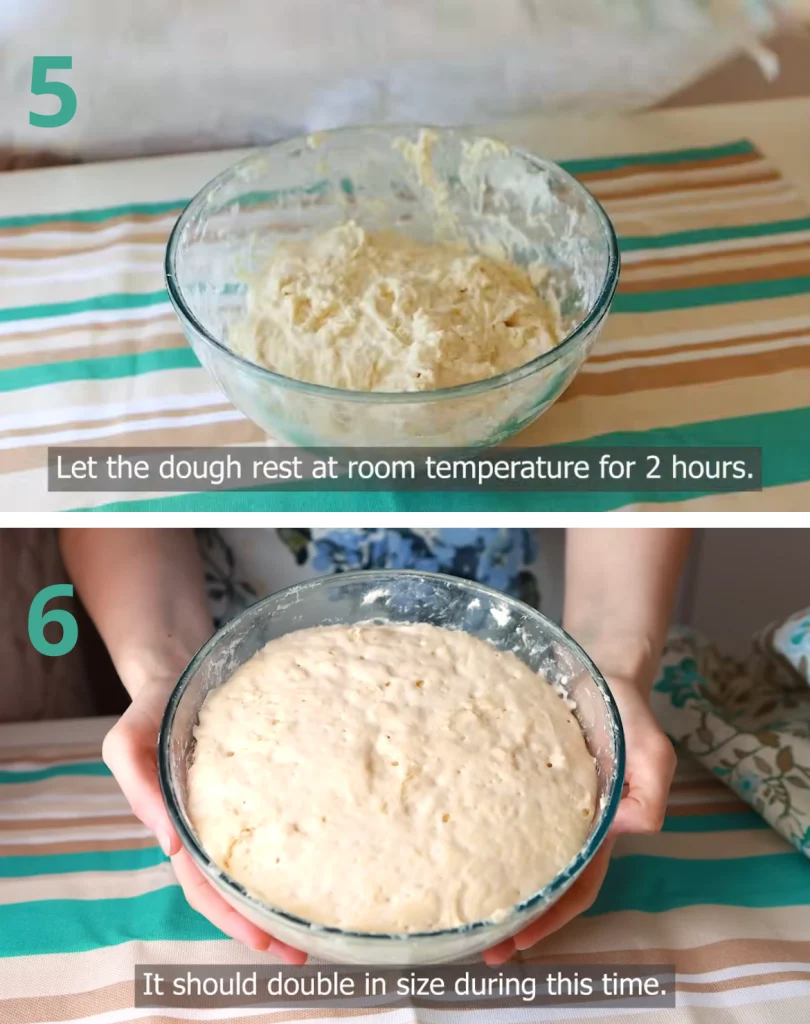 Cover the bowl with a clean cloth and let the dough rest at room temperature for about 2 hours. During this period, the dough will ferment, meaning the yeast will produce gas, making the dough light and airy. This first rise helps develop the bread’s flavor and texture.
After 2 hours, the dough should have doubled in size. This rise indicates that the fermentation has gone well. You should see bubbles in the dough, proof that the yeast has been active and your bread will have an airy texture.
Cover the bowl with a clean cloth and let the dough rest at room temperature for about 2 hours. During this period, the dough will ferment, meaning the yeast will produce gas, making the dough light and airy. This first rise helps develop the bread’s flavor and texture.
After 2 hours, the dough should have doubled in size. This rise indicates that the fermentation has gone well. You should see bubbles in the dough, proof that the yeast has been active and your bread will have an airy texture.
 Final Steps : Scoring and Baking
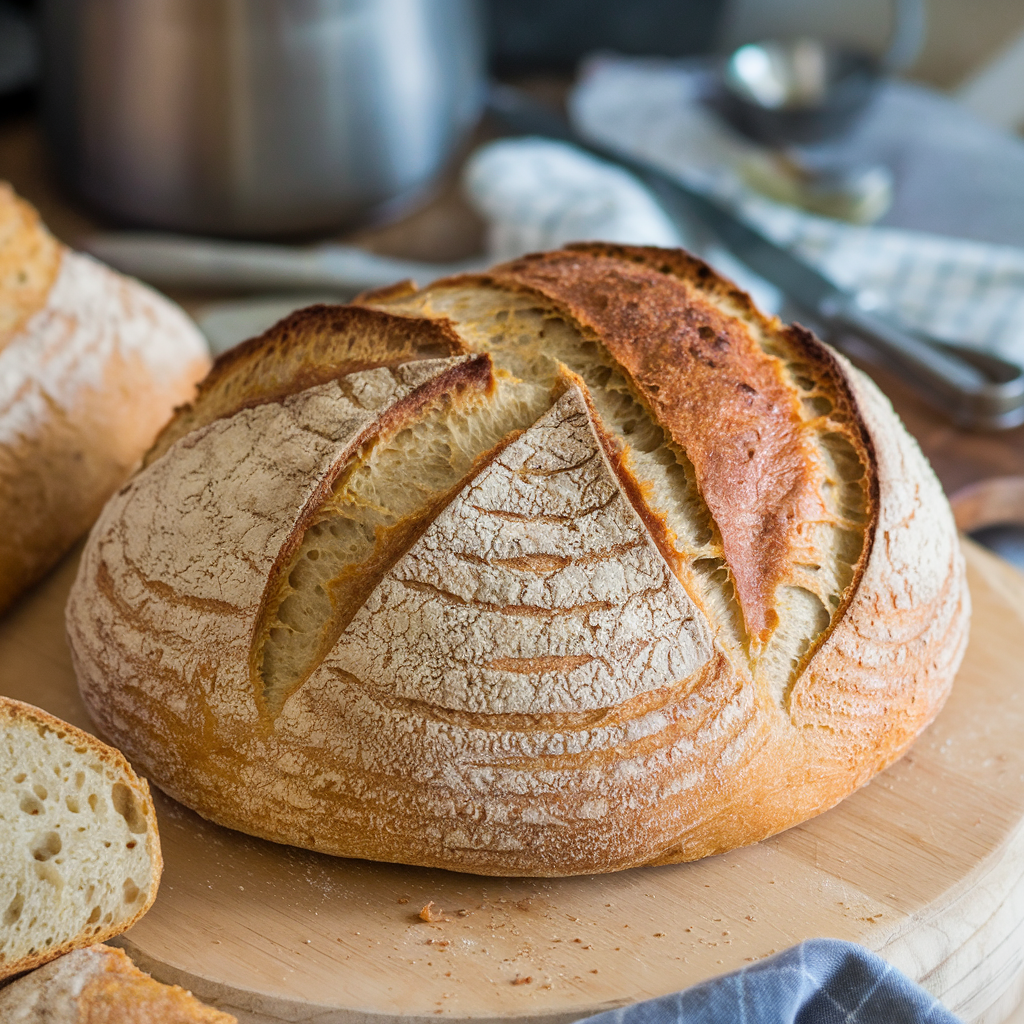
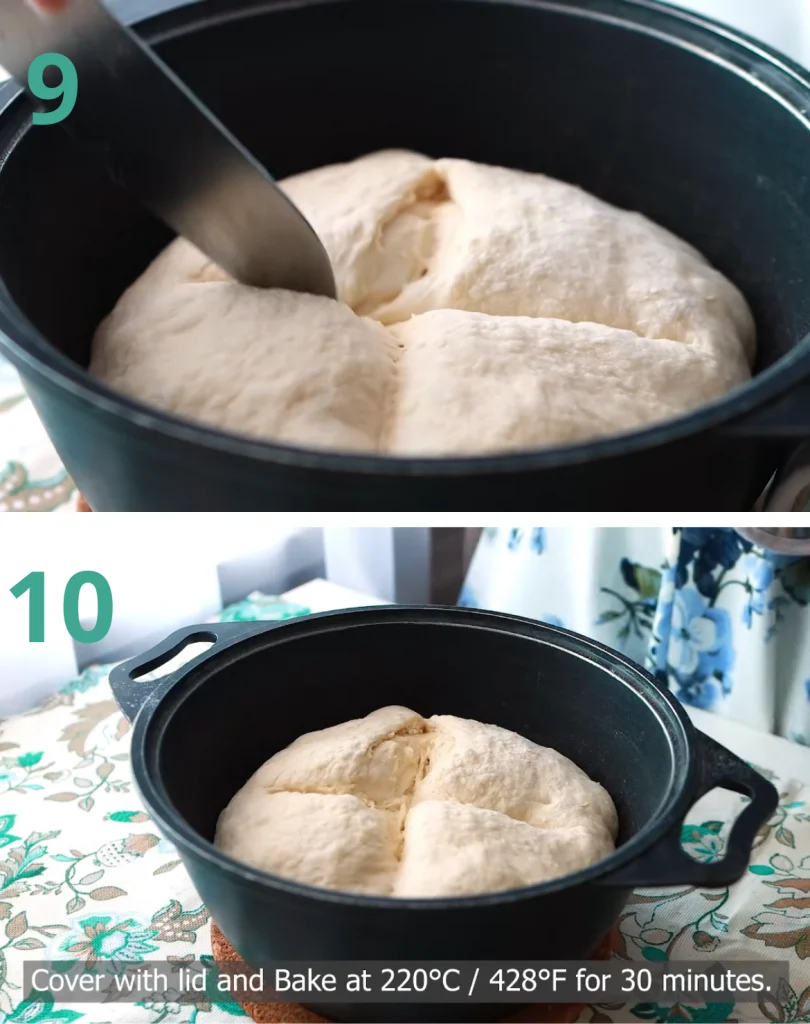
Preheat your oven to 220°C (430°F). Just before baking, make a cut on the top of the dough with a sharp knife. This scoring will allow the bread to expand evenly while baking. Bake for 25 to 30 minutes, or until the crust is golden brown and the bread sounds hollow when tapped on the bottom.
Final Steps : Scoring and Baking
Preheat your oven to 220°C (430°F). Just before baking, make a cut on the top of the dough with a sharp knife. This scoring will allow the bread to expand evenly while baking. Bake for 25 to 30 minutes, or until the crust is golden brown and the bread sounds hollow when tapped on the bottom.
This simple 3-Ingredient Bread recipe is perfect for beginners and seasoned bakers alike. With just flour, yeast, and salt, you can make a delicious homemade bread without kneading! The process is straightforward, and the results are a beautifully crusty loaf with a soft, airy interior. Plus, there’s flexibility for using whole wheat flour for added flavor and nutrition.
Activate the yeast: In a large bowl, mix the warm water with the yeast and let it rest for 5 to 10 minutes, until bubbles form. This step ensures that the yeast is active and ready to help the dough rise.
Prepare the dough: Add the flour and salt to the yeast mixture. Mix until a smooth, slightly sticky dough forms. Let the dough rest at room temperature for 2 hours to relax and begin its fermentation process.
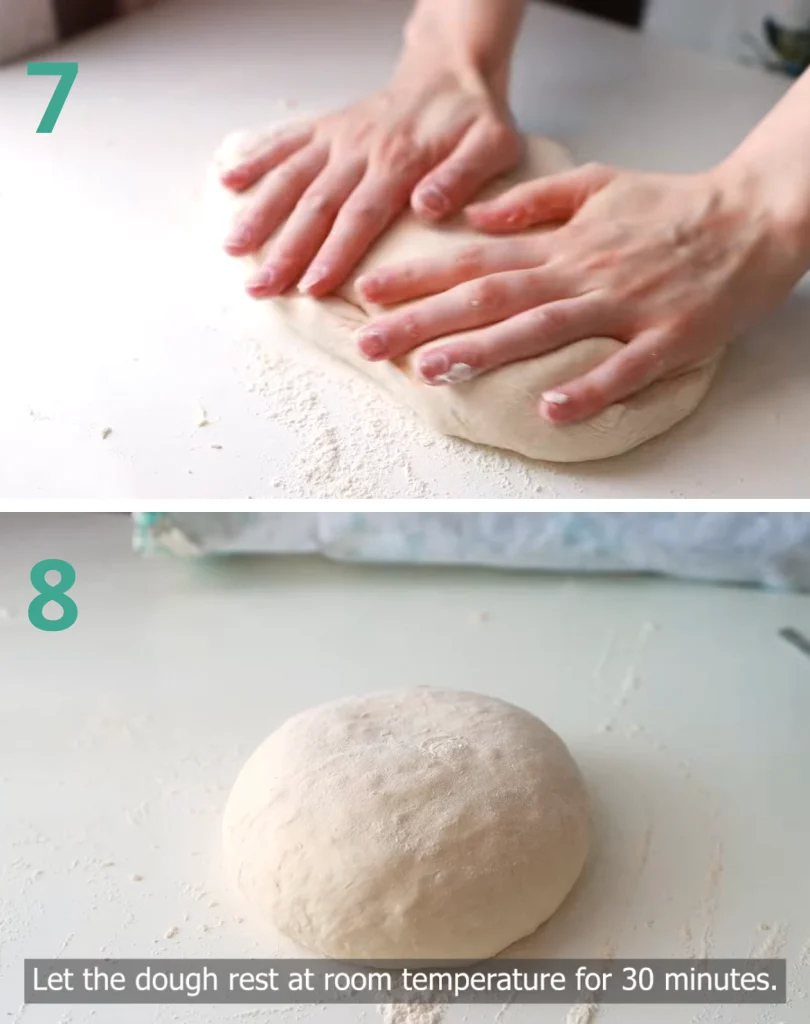
First folding and shaping: After 2 hours, transfer the dough to a lightly floured surface. Gently stretch each corner of the dough and fold it toward the center, repeating the fold one or two times to strengthen the dough's structure and evenly distribute the fermentation gases. Then, shape the dough into a ball, creating slight tension on the surface.
Final resting: Place the dough ball back on the work surface, cover it with a cloth, and let it rest at room temperature for 30 minutes. This final rest helps the dough relax further, making it easier to rise in the oven.
Scoring and baking: Preheat the oven to 220°C (430°F). Just before baking, use a sharp knife to make a slit across the top of the dough. This allows the bread to expand evenly as it bakes. Bake for 25 to 30 minutes, or until the crust is golden and the bread sounds hollow when tapped on the bottom.